Three Bags, Infinite Trips: The Minimalist Packing Philosophy That Actually Works
There's a certain kind of traveler you've probably seen at the airport. They glide through security with one clean, intentional bag. No checked luggage fees. No frantic digging for a charger buried under a pile of tote bags. They look, frankly, like they have their life together.
The secret? They've figured out something the rest of us are still learning: you don't need more bags. You need better bags — specifically, the right three.
This is the capsule bag wardrobe, and it's quietly changing the way fashion-conscious travelers think about what they carry.
Why Three? The Logic Behind the Number
The capsule wardrobe concept has been around in clothing for decades — the idea that a small collection of versatile, high-quality pieces outperforms a closet stuffed with options. Apply that same thinking to bags, and the number three starts to make a lot of sense.
One bag for everyday life. One for overnight and weekend trips. One that makes a statement when the occasion calls for it. Together, they cover roughly 95% of the situations you'll actually encounter — and they do it without competing with each other.
"I used to have maybe fifteen bags," says Priya, a marketing consultant based in Chicago who flies almost every week for work. "Half of them I never touched. Once I got down to three that I actually loved, I stopped wasting time every morning deciding what to carry."
That clarity is part of the appeal. But the real magic is in how the right trio functions as a system — pieces that share a color story, complement each other aesthetically, and can be mixed across seasons without looking like you're trying too hard.
Bag One: The Everyday Anchor
This is your workhorse. The bag you grab on autopilot, whether you're heading to a coffee meeting in SoHo or running errands on a Saturday afternoon. It needs to be structured enough to look polished but roomy enough to carry your actual life.
The best everyday bags tend to land somewhere between a medium tote and a structured shoulder bag — think 10 to 14 liters of capacity, a secure interior pocket for your phone, and a silhouette that doesn't scream "I'm trying." Neutral tones (cognac, black, warm tan, deep forest green) are your friend here because they match everything without being boring.
For travel purposes, your everyday bag doubles as your personal item on flights. That means it should fit under the seat in front of you and still have room for a book, your AirPods, a water bottle, and whatever you're pretending to work on at 30,000 feet.
Pro tip: look for a bag with an external slip pocket on the back. That's your TSA-line pocket — boarding pass, ID, phone — and it will genuinely change your airport experience.
Bag Two: The Weekend Warrior
This is the bag that lives by the front door Thursday night. It's your overnight duffel, your weekend-in-Austin bag, your "we're driving to the lake house" bag. It needs to hold two to three days of clothing, toiletries, and shoes without looking like you raided a lost and found.
The sweet spot in size is usually around 30 to 40 liters — big enough to pack properly, small enough to carry on. A structured duffel with both top handles and a detachable shoulder strap is incredibly versatile. So is a sleek backpack-style weekender that lets you keep your hands free while navigating a busy train station.
Color and material matter here more than people expect. A waxed canvas or ballistic nylon weekend bag in a deep navy or olive can look just as intentional as a leather tote — and it'll survive a lot more. Pair it with your everyday anchor bag and you've already got a coordinated travel look without even thinking about it.
"My weekender is the same warm brown as my everyday bag," says Marcus, a freelance photographer from Atlanta who splits his time between domestic shoots and international assignments. "They don't match exactly, but they go together. That was the thing I had to figure out — matching versus coordinating."
Bag Three: The Statement Piece
This is where you get to have a little fun. The statement bag is the one that elevates an outfit, that people notice, that you reach for when the stakes feel higher — a client dinner, a long weekend in New York, a wedding where you want to look like you actually planned your look.
It doesn't need to be a designer bag (though it can be). It needs to be distinctive. A structured top-handle bag in a rich jewel tone. A sculptural crossbody in a unexpected texture. Something with a little visual weight that can anchor an outfit on its own.
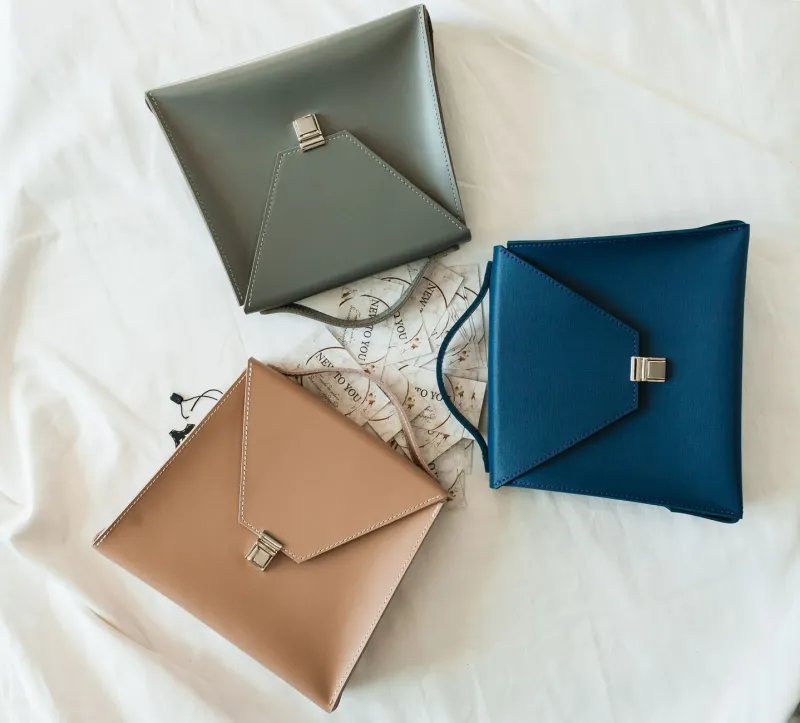
Here's the key: your statement bag should still play nicely with the other two. If your everyday bag and weekender are both in warm, earthy tones, a deep burgundy or cognac statement bag will feel cohesive. If your everyday look skews more minimalist and cool-toned, a slate blue or dove gray statement bag ties everything together.
Making the System Work Across Seasons
The real test of any capsule wardrobe — bags included — is whether it holds up year-round. The good news is that a well-chosen trio absolutely can.
In fall and winter, lean into the texture and warmth of your bags. A rich leather weekender looks incredible against a camel coat. In spring and summer, lighter silhouettes and casual fabrics (raffia, canvas, woven leather) can refresh the same basic trio without replacing it.
You're not buying new bags every season. You're styling the same three bags differently — and that's the whole point.
The Investment Angle
Building a capsule bag wardrobe does usually mean spending more per bag than you might be used to. That's intentional. Three well-made bags that last five to ten years will cost you less over time — and cause you a lot less closet chaos — than a rotating cast of cheaper options that wear out or fall out of style.
Think of it less as shopping and more as editing. You're not adding to your collection. You're refining it down to what actually works.
That's the whole philosophy, really. Carry less. Go further. Look better every single time you walk out the door.