Dead Weight: The True Financial Cost of Every Bag Sitting in Your Closet Untouched
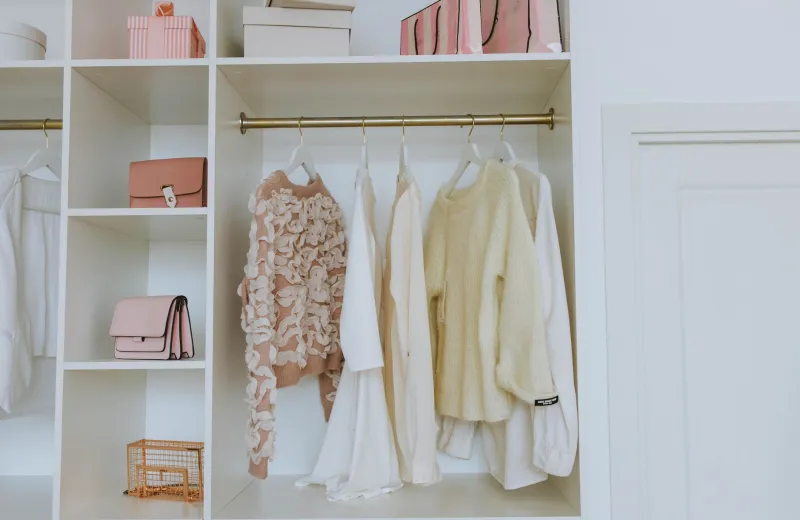
Let's talk about the bag you bought with full intentions. The one you justified with a sale price or a special occasion that never quite materialized. It's sitting on a shelf right now, dust bag intact, tags maybe still dangling. You feel vaguely good about owning it. But here's the thing — that bag isn't neutral. It's actively costing you.
Not in some abstract, lifestyle-guru way. In real, calculable dollars. Let's do the math.
What "Owning" a Bag Actually Means Financially
When you spend $300 on a bag you never use, you haven't made a purchase. You've made an investment with a zero percent return. But it gets worse, because opportunity cost is real. That $300 sitting in a bag on your shelf could have been $300 in a high-yield savings account earning 4–5% annually. Over five years, that's roughly $60–$75 in interest you'll never see. Over a decade, it compounds further.
Now multiply that across the average American woman's bag collection — estimated at around 10 to 15 bags — and assume even a third of those go largely unused. You're potentially looking at $200–$400 in lost interest alone, before we even get to depreciation.
And bags do depreciate. Most do, anyway. A $300 mid-range bag purchased three years ago might resell for $40 to $80 today, depending on condition and brand. That's a depreciation loss of $220 to $260 on a single item. Fashion retail isn't the stock market, but the losses are just as real.
The Space Math Nobody Talks About
Closet space in the US costs money. Whether you're renting or owning, every square foot of your home carries a price tag. The average American pays roughly $1 to $3 per square foot per month in housing costs, depending on location. A dedicated shelf or bin for bags might occupy 4–6 square feet of closet real estate.
At the low end, that's $48 a year just to store bags you're not using. In a city like New York or San Francisco, where space is at an absolute premium, that number could be three to five times higher.
Storage bins, dust bags, shelf dividers, closet organizers — the infrastructure of a large bag collection has its own price tag too. Add it up over a few years and you've got a surprisingly significant line item.
The Mental Load Is Real (And It Has a Cost)
This one's harder to quantify, but researchers in organizational psychology have documented something called "decision fatigue" — the mental drain that comes from managing too many choices. A cluttered collection doesn't just take up physical space; it occupies cognitive real estate every time you open your closet.
You scan the shelf. You second-guess. You feel vague guilt about the bag you never carry. You feel vague anxiety about whether you're using the right one. That low-level hum of unresolved decisions adds up to real stress, and stress has documented effects on productivity, sleep, and decision-making quality.
Some productivity consultants estimate that clutter-related mental overhead costs the average person several hours of focus per week. We'll let you assign a dollar value to your own time.
The Bag ROI Calculator: Run Your Own Numbers
Here's a simple framework for assessing whether any bag in your collection is pulling its weight:
Step 1: Purchase Price ÷ Number of Uses = Cost Per Use A $400 bag you've carried 200 times costs $2 per use. A $150 bag you've carried 5 times costs $30 per use. Which one was the smarter buy?
Step 2: Estimate Current Resale Value Check platforms like Poshmark, ThredUp, or The RealReal for comparable listings. What would your bag actually sell for today?
Step 3: Calculate Your True Loss Original price minus current resale value equals your realized depreciation loss. If you sold it today, that loss becomes final. If you hold it, depreciation typically continues.
Step 4: Project Opportunity Cost Take your current resale value and ask: if I converted this to cash today and put it in a 4.5% HYSA, what would it be worth in three years? That's the opportunity cost of holding.
Step 5: Honest Use Projection Be real with yourself. In the next 12 months, how many times will you actually carry this bag? If the answer is fewer than 10, the math probably doesn't support keeping it.
So What Do You Do With the Results?
Once you've run the numbers, the path forward is usually one of three things:
Recommit. Some bags just need reintroduction. If a bag has genuine potential to earn its place — great quality, versatile design, solid condition — make a deliberate plan to actually use it. Schedule it into your rotation. Give it a real shot before writing it off.
Rehome strategically. Selling sooner is almost always better than selling later when it comes to fashion. The longer a bag sits, the more it depreciates, the more trends shift, and the harder it becomes to find a buyer willing to pay a fair price. If you're not using it, list it now while it still has value.
Release without guilt. Some bags have depreciated past the point of meaningful resale value. Donating to organizations like Dress for Success, local shelters, or community thrift programs isn't a loss — it's a conscious decision to let the bag do what it was meant to do: be carried.
The Carry More, Go Further Philosophy
At OOOBag, we're big believers in bags that actually work for you — not bags that look good on a shelf while quietly draining your resources. A smaller collection of bags you genuinely love and regularly use will always outperform a sprawling inventory of maybes and somedays.
The bags worth owning are the ones you reach for. Everything else is just overhead.