Desk to Dinner: Building One Bag That Clock-Outs With You

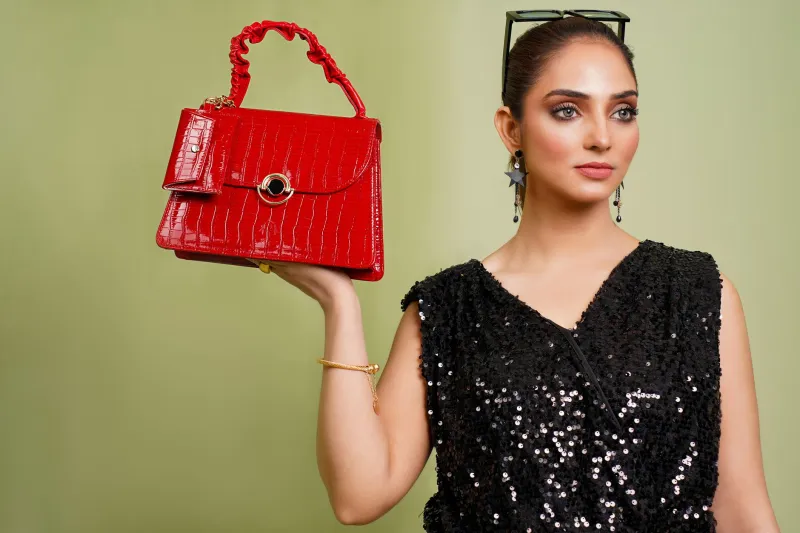
Photo: minimal leather crossbody bag on restaurant chair evening city street style, via static0.gamerantimages.com
There is a specific moment on a Thursday when the whole problem shows up at once. You are leaving the office at 5:40, dinner is at 7, and going home is not happening. You look at the bag on your shoulder and realize it is dressed for the wrong event entirely.
This is the no-home-between problem, and it is more common than ever now that so many people split the week between office and home. The solution is not a second bag in the trunk. It is one bag designed for the whole day.
Three ways people solve it, and why two of them fail
Carry two bags. The tote for work, the small bag for dinner. It works, technically, but you spend the evening managing a bag you are not carrying. That is the second-bag tax, and you pay it in attention.
Stuff a clutch inside the tote. Better, and very common. The problem is that a soft clutch jammed under a laptop for eight hours comes out creased and misshapen. It also means unpacking and repacking in a bathroom mirror, which is nobody's idea of a smooth transition.
One bag that does both. The real answer. It requires being honest about what you actually need between 9 a.m. and 9 p.m., and ruthless about everything else.
Size: the sweet spot is narrower than you think
Start with what your day actually requires. For most hybrid workers in 2026, that is a slim laptop or a tablet, a charger, a cardholder, keys, a phone, and one small pouch of personal items. That load fits comfortably in a bag roughly 11 to 13 inches wide with a base that is flat enough to stand on its own.
What matters more than volume is silhouette. A bag that keeps a clean shape when it is only half full looks appropriate at dinner. A bag that collapses into a puddle when the laptop comes out looks like a tote that lost its nerve. Look for a lightly structured body, a reinforced base, and a top that closes properly rather than gaping open on the chair next to you.
Keep the empty weight under about a pound and a half. A leather bag can be light. A bag that is heavy before you put anything in it will be a chore by 6 p.m.
The strap system is the entire trick
The most useful feature in a work-to-evening bag is not a compartment. It is the ability to change how you carry it.
Look for a bag with a short top handle plus a detachable, adjustable crossbody strap. Carried by the handle, it reads polished and office-appropriate. Swung across your body, it frees your hands for a glass, a coat check ticket, or a phone map on a walk to the restaurant. Both should be comfortable for at least twenty minutes at a time.
Two details to check before you buy. First, the clips should swivel. Non-swiveling clips twist the strap every time the bag moves, and by evening the strap is a corkscrew. Second, the strap should be fully removable, not just adjustable, so you can strip the bag down to a clutch-like carry for a seated dinner without a strap dangling in your lap.
Fewer compartments, better ones
Compartment sprawl is the enemy here. Every dedicated sleeve is a slot that stays empty in the evening and adds bulk all day. Aim for three interior zones and no more: a padded sleeve that fits your specific device, one zippered pocket for small valuables, and open space for everything else.
Exterior matters just as much. A single flat exterior pocket is genuinely useful for a phone or a transit card. More than that starts to look like luggage.
The swap pouch is the move
Here is the system that makes the whole thing work: one small zippered pouch, roughly the size of a hand, that carries your evening essentials and lives inside the bag all day.
In it: a cardholder, a tinted lip balm, a compact or blotting sheets, a mini fragrance, a hair tie, and a small charger cable. When the workday ends, you pull out the laptop and the lunch container, and the pouch is already packed. Nothing gets repacked at the mirror. Nothing gets forgotten on the desk.
The pouch also doubles as a clutch if the dinner turns out to be more dressed up than expected.
What stays in the car or the desk drawer
A true work-to-evening bag requires leaving things behind. The full-size water bottle, the lunch container, the gym shoes, the spare umbrella, the folder of printouts. Those items need a home at the office or in the car, because a bag that carries them all day is a bag that carries them to dinner.
The most common mistake is packing for the day you might have instead of the day you are actually having. You do not need three chargers. You do not need the entire makeup bag. You do not need a backup tote folded in the bottom.
Evening-ready details
A few small things separate a bag that works at dinner from a bag that merely shows up.
- A dark, saturated neutral. Black, espresso, navy, deep olive. It forgives a day of handling and does not clash with whatever you changed into.
- Hardware that does not announce itself. Brushed finishes look more evening-appropriate than bright polished metal, and they hide scratches better.
- A quiet closure. A smooth zipper or a single turnlock. Snap flaps that flap open are a dinner-table annoyance.
- A clean base. Feet keep the leather off restaurant floors and keep the bag standing when you set it down.
- No exterior branding. Especially if your dinner is with people you met at work.
The short version
Eleven to thirteen inches wide, lightly structured, under a pound and a half empty. A top handle plus a detachable, swiveling crossbody strap. Three interior zones. One exterior flat pocket. A swap pouch for the evening. Everything else lives at the office. That is the bag that gets you from the 4 p.m. meeting to the 7 p.m. reservation without a detour and without a second bag on your arm.