Why Your Bag Is the Real Reason You're Missing Your Flight
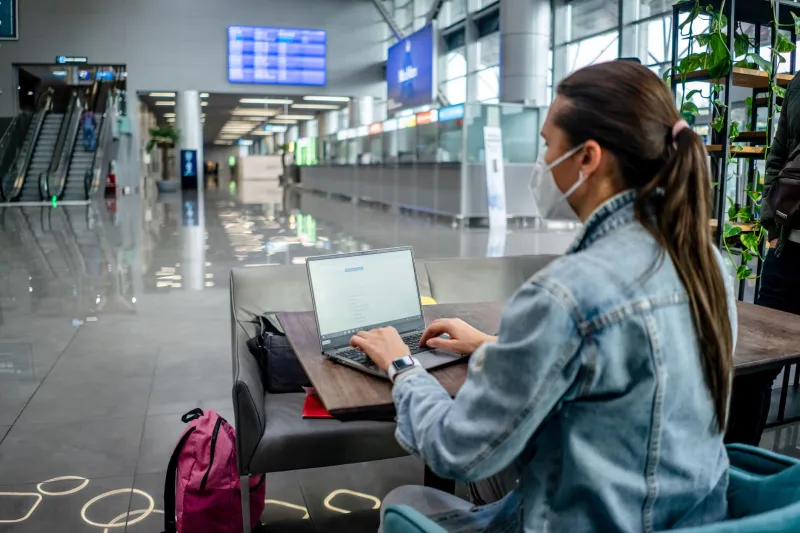
You've done everything right. You checked in online. You got to the airport with time to spare. You even wore slip-on shoes. And then you hit security — and everything falls apart. Bins everywhere. Laptop buried under three layers of stuff. A TSA agent waving you aside for a secondary screening. You watch your gate time tick down with that particular flavor of airport dread.
Here's what most travelers don't realize: a significant portion of security slowdowns aren't random. They're structural. They're built right into the bag you chose and the way you packed it.
What TSA Agents Actually See (And What Slows Them Down)
X-ray imaging works by detecting density and material composition. When a bag is packed in an organized, layered way with clear separation between item categories, the image reads cleanly. When a bag is a jumble of cables, cosmetics, snacks, and random electronics, the image looks like abstract art — and an agent has to call it for a manual inspection.
Frequent travelers and aviation security experts consistently point to a handful of bag-related culprits that trigger secondary screening:
- Electronics packed without separation. Cords tangled around devices create dense, confusing images.
- Liquids not in a clear, accessible bag. If an agent can't immediately verify your 3-1-1 compliance, out comes everything.
- Laptop inaccessible without full unpacking. At standard checkpoints, laptops must come out. If yours is buried, you're that person holding up the line.
- Metal hardware-heavy bags. Some bags are so laden with decorative buckles, chains, and zippers that they generate unnecessary flags on the belt.
- Overstuffed carry-ons that don't close cleanly. Gate agents and security staff both notice, and both have the authority to make your life difficult.
The Carry-On Gamble: When Bags Fail the Overhead Test
Even before you hit the X-ray belt, your bag's dimensions are already being evaluated. Airlines have gotten increasingly strict about personal item and carry-on sizing, particularly on budget carriers like Spirit, Frontier, and the basic economy tiers of major airlines.
The issue isn't always that bags are too big — it's that they're the wrong shape. A bag that's technically within the cubic inch limit but has an awkward silhouette might not fit cleanly in the sizer at the gate. Soft-sided bags that expand when packed can push past their stated dimensions. And bags with external pockets that add width are notorious for failing the overhead bin test even when the main compartment is within spec.
Frequent flyers recommend treating carry-on dimensions as a maximum, not a target. A bag that comfortably sits a half-inch under the limit will always behave better than one that technically fits only when packed in a specific way.
The Airport-Proof Bag Checklist
If you're shopping for a new travel bag, here are the features that genuinely make a difference at security:
✓ Dedicated laptop sleeve with external or top access This is non-negotiable for frequent flyers. The sleeve should be accessible without opening the main compartment, so you can pull the laptop in one clean motion.
✓ External or easily accessible liquids pocket A zippered front pocket sized for a quart bag means you're not unpacking your entire life to comply with 3-1-1 rules.
✓ Cable and electronics organizer Built-in cord management isn't just about aesthetics — it creates cleaner X-ray images and faster rescreening if needed.
✓ Minimal external metal hardware Chain straps, metal feet, and decorative buckles are beautiful. They're also X-ray noise. For dedicated travel bags, sleeker hardware is a practical win.
✓ Structured shape that holds its form A bag that collapses or morphs when packed is harder to assess quickly at security and harder to fit in overhead bins consistently.
✓ Clear interior organization Multiple compartments that keep categories of items separated — tech, personal care, snacks, documents — aren't just convenient. They're faster to screen and faster to repack.
Retrofitting What You Already Own
Not in the market for a new bag? You can dramatically improve your airport experience with a few smart additions to whatever you're already carrying:
Packing cubes for compression and organization. Even one cube dedicated to electronics keeps cords and devices grouped and legible on X-ray.
A dedicated clear toiletry pouch, always pre-packed. Stop assembling your liquids bag at the security line. Keep one permanently stocked and ready to pull out in one motion.
A slim tech organizer for the outer pocket. If your bag has any accessible exterior pocket, a flat tech organizer that holds your laptop, charger, and earbuds can turn a chaotic main compartment bag into a functional travel setup.
A luggage tag with your info on the inside flap. Minor, but helpful when bins get shuffled and bags look similar on a crowded belt.
The Gate-Check Trap
One scenario that catches travelers off guard: the gate check. If your carry-on gets flagged as oversized or the overhead bins are already full, your bag goes under the plane — and everything you needed access to during the flight is suddenly inaccessible.
The solution is intentional layering. Always pack your flight essentials (medications, valuables, anything you'd be devastated to lose) in a personal item that stays with you, not in the carry-on that might get pulled. Think of your under-seat bag as your insurance policy.
Travel Smarter, Not Just Faster
The goal isn't to sprint through security — it's to move through it without friction. The right bag, packed the right way, makes that almost automatic. And when you're not burning mental energy on security chaos, you've got more of yourself left for the actual trip.
That's the whole point, isn't it?