Open It and Sniff: What a New Bag's Scent Is Actually Telling You
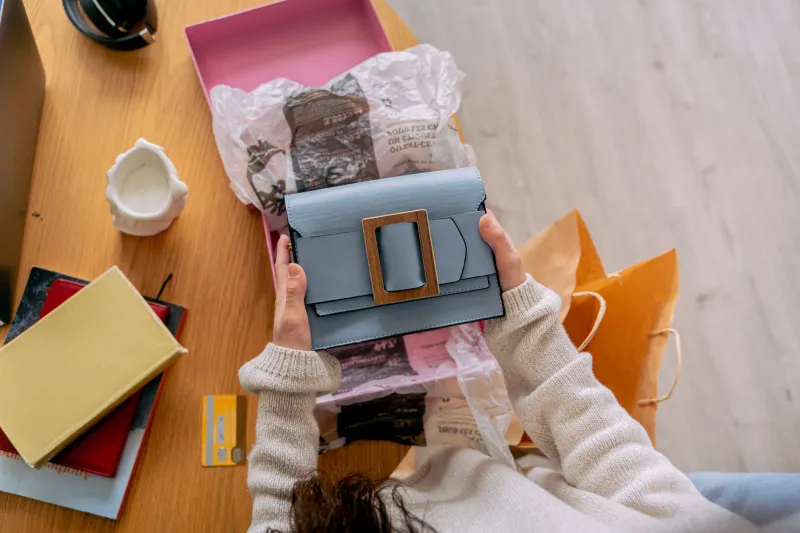
There's a ritual most of us perform without thinking about it. You get the package, you tear it open, and before you even hold the bag up to the light, you bring it close and breathe in. It's instinctive. And it turns out, your instincts are onto something real.
The smell of a new bag isn't just atmosphere. It's data. The materials used, the tanning process applied, the adhesives chosen, the finishing chemicals sprayed on — all of it leaves a trace, and that trace ends up in your nose the moment you open the box. Learning to read that information could save you from a bad purchase, a health concern, or just the slow disappointment of a bag that doesn't hold up the way you hoped.
What Good Leather Is Actually Supposed to Smell Like
Let's start with the gold standard. Genuine full-grain or top-grain leather has a scent that's hard to fake and even harder to forget once you know it. It's earthy, faintly animal, with a warm, slightly smoky undertone depending on how it was tanned. It shouldn't be overwhelming. It shouldn't make you want to put the bag down.
Vegetable-tanned leather — the kind that uses natural tannins from tree bark and plant matter — tends to have the most complex, pleasant smell. Think old library, quality saddlery, or a well-worn vintage shop with good inventory. Chrome-tanned leather, which is far more common in mass production, has a slightly more chemical edge but should still register as fundamentally organic and mild.
If a bag is labeled genuine leather and smells strongly of chemicals right out of the box, that's worth pausing on. A little off-gassing is normal. A lot of it is a red flag.
The Chemical Smell: What It's Really Signaling
That sharp, synthetic, almost plasticky smell that hits you from some bags? It's not just unpleasant — it's informative. Most of the time, you're smelling one of a few things.
PVC and bonded leather release volatile organic compounds (VOCs) as they off-gas. Bonded leather, which is essentially a layer of polyurethane coating applied over shredded leather scraps or fabric, often smells more like a new shower curtain than a quality handbag. It's not necessarily dangerous in small amounts, but it does tell you something about what you're actually buying.
Excess adhesives are another culprit. Budget bags often rely heavily on glue to hold linings, handles, and structural elements in place rather than stitching. Those adhesives have a distinctive chemical odor that tends to fade over time — but often only after the glue itself starts to fail.
Formaldehyde-based treatments are used in some textile and leather finishing processes to resist wrinkles, repel water, or add stiffness. At low levels they're common and generally regulated, but a strong, sharp, almost medicinal smell from a fabric-bodied bag can sometimes point to higher concentrations than you'd want sitting on your shoulder all day.
None of this means you should panic every time a bag has any smell at all. It means you should pay attention to intensity, character, and whether the smell is improving or getting worse as the bag airs out.
The New Fabric Bag Smell and What It Means
Canvas, nylon, polyester — fabric bags have their own olfactory signatures. A clean, slightly industrial smell from a new nylon bag is pretty normal. Nylon is a synthetic material and it smells like one. That's fine.
What's less fine is a musty, mildew-adjacent smell that suggests the bag was stored in humid conditions — a warehouse overseas, a container ship, a poorly ventilated storage unit. Mold and mildew in fabric can be difficult to fully eliminate, and a bag that smells like it on day one is going to be a project.
Some fabric bags also carry the smell of the dye used to color them. Vivid, saturated colors sometimes require more aggressive dyeing processes, and if that smell is strong and chemical rather than faintly fabric-like, it's worth letting the bag air out significantly before carrying it — especially if the interior lining is dark-colored and touching your belongings.
Suede, Exotic Textures, and the Gray Areas
Suede is leather's more delicate, more odor-absorbing cousin. Real suede has a soft, dusty, slightly raw smell — pleasant in a subdued way. Faux suede (usually microfiber) tends to smell more neutral or very faintly synthetic. Neither is necessarily a problem, but they're easy to tell apart by scent if you've handled both.
Bags marketed as "exotic" materials — snake print, croc embossed, ostrich texture — are almost always either genuine leather with embossed patterns or synthetic materials designed to mimic the look. The smell will tell you which camp you're in faster than any product description. Genuine embossed leather smells like leather. Synthetic exotic-look materials smell like synthetic materials. Simple as that.
How to Actually Do a Bag Smell Test Before You Buy
If you're shopping in person, this is easy. Open every pocket, unzip every compartment, and take a real breath inside the bag. The interior lining often holds scent more intensely than the exterior. If the inside smells significantly more chemical than the outside, that lining is probably where the cost-cutting happened.
If you're buying online — which, let's be honest, is most of us most of the time — the smell test happens at unboxing. When your bag arrives, open it immediately and let it breathe before you make any final judgments. Some smell is normal and will dissipate within a day or two of airing out. If you're still getting a strong chemical hit after 48 hours in a well-ventilated space, that's useful information to factor into your return window decision.
One practical trick: put the bag in a room with good airflow for a day, then smell it again. Quality materials improve with airing. Problematic materials often don't change much, or change very slowly.
Your Nose Knows More Than You Think
We spend a lot of time evaluating bags visually — the hardware, the stitching, the shape, the proportions. We run our hands over the leather to feel for quality. But smell is the sense we trust least in shopping contexts, maybe because it feels less sophisticated than a trained eye.
That's a mistake worth correcting. Your olfactory system is picking up real chemical information about real materials. A bag that smells genuinely good is usually made from genuinely good stuff. A bag that makes you want to leave it on the porch for a week is telling you something about what went into making it.
At OOOBag, we're always in favor of carrying more and going further — but not at the cost of quality that you can smell from across the room. Trust the sniff test. It's been working longer than any authentication app.