Your Carry-On, Completely Dialed In: A Packing Strategy for Every Kind of Trip
There's a specific kind of chaos that happens when you're digging through a carry-on at the gate, holding up the boarding line while you hunt for your AirPods or your passport. We've all been there. The good news is it's entirely preventable — and fixing it doesn't require buying a completely new bag setup. It requires a system.
Whether you're hopping a Southwest flight for a long weekend or heading to Europe for two weeks with nothing but a carry-on, the principles are the same. Here's how to get your in-flight kit together in a way that works every time.
Start With the Right Bag for the Mission
Before we get into what goes inside, let's talk about the vessel itself. The best carry-on isn't the biggest one — it's the one that fits your actual travel patterns.
For weekend trips and domestic flights, a structured duffel or a soft-sided carry-on in the 40–45 liter range hits the sweet spot. It slides into overhead bins without a fight, fits under the seat on smaller regional jets, and doesn't feel like overkill when you're only gone for three days. Bonus if it has an exterior slip pocket — that single feature will save you more times than you'd expect.
For international travel or longer business trips, a hard-sided spinner in a standard carry-on size (think 22 x 14 x 9 inches, which meets most major airline requirements) gives you structure and protection. Look for one with a TSA-approved lock and an interior divider system. You'll thank yourself on day eight.
For the hybrid traveler who wants one bag that works for both scenarios, a convertible travel backpack with a dedicated laptop compartment and a luggage pass-through sleeve is genuinely versatile. It can look polished enough for a client meeting and functional enough for a red-eye.
The Packing Cube Method (Done Right)
Packing cubes have been around long enough that they're not exactly a secret anymore — but a lot of people use them wrong. Tossing everything into one giant cube and calling it a day misses the point.
The move is to assign each cube a specific category and stick to it. A simple system that works across trip lengths:
- Cube 1 (clothing tops): T-shirts, blouses, or button-downs, rolled tightly to compress volume
- Cube 2 (bottoms and layers): Pants, shorts, a lightweight jacket
- Cube 3 (undergarments and socks): Everything small and easy to lose
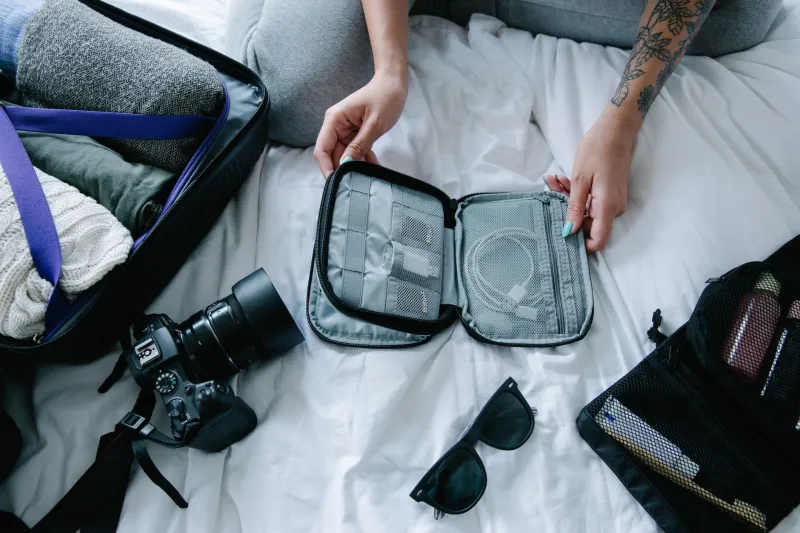
- Slim flat pouch: Documents, chargers, cables — the stuff you need access to without unpacking
For longer trips, a compression cube for bulkier items like a hoodie or denim can cut volume significantly. Several brands make dual-sided compression cubes that squeeze down to roughly half the packed size — genuinely useful, not just marketing.
TSA Without the Stress
The security line is where a good system proves itself. A few habits that make a real difference:
Keep your liquids in a dedicated exterior pocket, not buried in a cube. The TSA 3-1-1 rule — containers 3.4 oz or smaller, in one quart-sized clear bag — isn't going anywhere. Have that bag accessible before you hit the belt, not after.
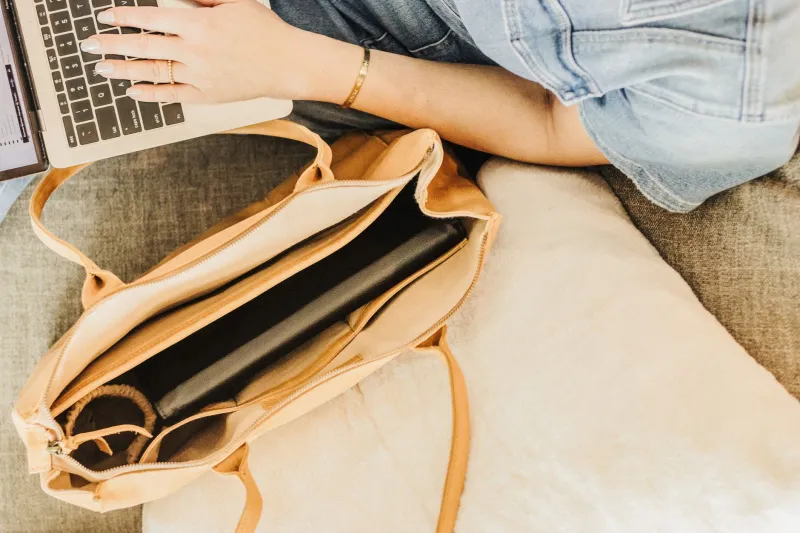
Your electronics live in one place. Laptop, tablet, and any large electronics need to come out at the checkpoint. A bag with a clamshell-style opening and a dedicated tech sleeve means you can pull your laptop without avalanching everything else onto the belt.
Shoes and outerwear come off. This is obvious but easy to forget in a rush. Slip-on shoes aren't just a style choice — they're a time-saver.
Know what's in your bag. This sounds basic, but TSA agents flag bags they need to hand-search, which happens most often when the X-ray image looks cluttered and unclear. A well-organized bag with distinct zones reads cleanly on the screen.
Building for Different Trip Lengths
Here's how the same core system scales:
The 2-Day Weekend Getaway Two outfits, one pair of shoes beyond what you're wearing, minimal toiletries. This is where a structured tote or small duffel wins over a full carry-on — you don't need the extra real estate, and a smaller bag means faster airport navigation. Pack like you're going to a friend's place, not a resort.
The 4–5 Day Business Trip This is where most carry-on systems get tested. The key is building outfits around one shoe color and two neutral bottoms that mix across multiple tops. A garment folder (essentially a flat packing cube designed for dress shirts and blazers) keeps professional pieces wrinkle-free without dry cleaning on arrival.
The 10+ Day International Trip (Carry-On Only) It's absolutely doable, but it requires commitment to the capsule wardrobe concept. Stick to a tight color palette, plan for laundry access mid-trip, and be ruthless about what actually needs to come with you versus what you can buy or borrow if needed. Your personal item (the bag that goes under the seat) becomes crucial here — a structured tote or backpack that expands slightly gives you room for souvenirs or shopping on the way home.
The Personal Item: Don't Waste It
Most airlines allow a carry-on plus a personal item, and a lot of travelers underuse that second slot. Your personal item should be doing real work.
A well-designed tote or backpack that functions as both a travel bag and a day bag is the move. Use it to carry your in-flight essentials — headphones, snacks, a book, your laptop if you'll use it mid-flight — so your overhead bin bag is purely clothes and toiletries. When you land, that same bag becomes your day bag for exploring, meetings, or dinner. One bag, multiple contexts. That's the OOOBag ethos in action.
A Few Finishing Thoughts
The best carry-on setup is the one you'll actually maintain trip after trip. Start with a system that's simple enough to reset quickly — because the real test isn't the outbound flight. It's whether you can repack efficiently for the return.
Get the bag right, build the system around it, and the airport stops feeling like an obstacle. It starts feeling like the beginning of something good.