Your Bag Is Trying to Tell You Something — Are You Listening?

There's a certain guilt that comes with eyeing a new bag when your current one still technically works. The zipper zips. The strap holds. It gets the job done — sort of. But "sort of" is doing a lot of heavy lifting in that sentence, and if you're honest with yourself, you know it.
Upgrading a bag doesn't have to be a throwaway move. In fact, when done thoughtfully, it's the opposite. It's about recognizing that your life has shifted — your job, your travel habits, your style, your daily load — and that what carried you through one chapter might not be built for the next one. The key is learning to tell the difference between a bag that genuinely needs to go and one you're just bored with.
Here's how to figure out which one you're dealing with.
When Functionality Starts Working Against You
The most honest signal is a practical one: your bag is making your life harder instead of easier. Maybe it's a tote that worked great when you were commuting by car but now that you're on the subway every day, the lack of a zipper closure has you clutching it like a lifeline. Maybe the single interior pocket made sense when you carried less, but now you're fishing for your keys every morning like you're digging for treasure.
Functional friction is real, and it adds up. When a bag consistently creates small daily frustrations — wrong size, wrong structure, wrong access points — that's not a minor inconvenience. That's a compatibility problem. And no amount of loyalty to a bag you once loved is going to fix a zipper that's in the wrong place for how you actually live.
Ask yourself: Is this bag working with my routine, or am I constantly working around it?
Your Life Stage Has Quietly Shifted
Bags are deeply tied to who we are at a given moment. The slouchy hobo you loved in your mid-twenties might feel off now that you're navigating a more structured professional environment. The sleek mini crossbody that was perfect for weekend brunches doesn't cut it when you're traveling for work every other week and need to carry a laptop, a charger, and your sanity.
This isn't about abandoning who you were — it's about acknowledging who you are now. Life stage shifts don't always announce themselves loudly. Sometimes it's subtle: you got a new job, you started traveling more, you moved to a new city, you had a kid. Each of those changes reshapes what you need a bag to do.
If you find yourself regularly wishing your bag had a different feature, a different size, or a different level of polish, that's worth paying attention to. It's not restlessness. It's your instincts telling you there's a mismatch between what you're carrying and where you're going.
The "Good Enough" Trap
One of the sneakiest reasons people hold onto bags past their usefulness is the good-enough trap. The bag isn't broken. It's not embarrassing. It works. And in a world where we're all trying to be more intentional consumers — which is genuinely a good thing — there's pressure to keep using something until it's completely done.
But here's the nuance: sustainability isn't the same as self-denial. Holding onto something that no longer serves you well, just to avoid feeling wasteful, doesn't actually serve anyone. Especially when the alternative is making a considered, deliberate upgrade to something that'll last you another decade.
The real question isn't "Is this bag still usable?" It's "Is this bag still right for me?" Those are very different questions.
What the Physical Condition Is (and Isn't) Telling You
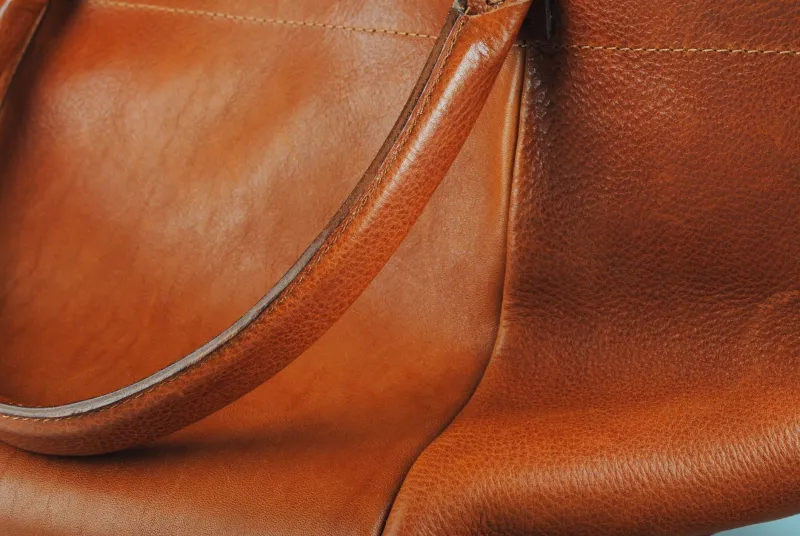
Wear and tear is its own language, but you have to know how to read it. Some signs of aging — a patina on leather, softening of structure, minor scuffs — are normal and even beautiful. They tell a story. But other signs are red flags: a lining that's disintegrating and shedding onto everything you own, hardware that's broken or missing, straps that have frayed to the point of being unreliable.
If a bag can be repaired — and many quality bags absolutely can — that's worth exploring before assuming it's time to replace it. A good cobbler or leather repair shop can work wonders. But if the damage is structural, widespread, or would cost more to fix than the bag is worth, it's okay to let it go. Consciously. Maybe donate it, sell it through a resale platform, or recycle it through a brand take-back program if one exists.
The goal isn't to keep a bag forever. It's to make intentional decisions at every stage of that bag's life.
Style Evolution Is Legitimate, Too
Let's be real: sometimes the reason you want a new bag is aesthetic, and that's a valid reason. Style evolves. Tastes change. What felt exciting and expressive five years ago might feel dated or just... not you anymore. That's normal human development, not shallowness.
The key is being honest about it. If you want a new bag primarily because your style has shifted, own that — but also ask yourself whether you're making a considered choice or just reacting to a trend that'll feel stale in six months. There's a difference between evolving your aesthetic and chasing whatever just hit the runway.
If a new bag genuinely excites you in a way that feels aligned with who you are right now — not just who you saw on Instagram this morning — that's a good sign you're making a real upgrade, not an impulse purchase dressed up as one.
A Framework for Making the Call
Before you commit to an upgrade, run through these questions honestly:
- Does my current bag create daily friction? If yes, identify exactly what's not working and make sure the new bag solves it.
- Has my lifestyle changed in a meaningful way? New job, new city, new travel patterns, new priorities — these all count.
- Can this bag be repaired or refreshed? Sometimes a new strap, new hardware, or a professional clean is all it needs.
- Am I replacing or upgrading? Replacing is reactive. Upgrading is intentional. Know which one you're doing.
- What will I do with the old bag? Resell it, donate it, give it to someone who'll use it. Close the loop.
The bag transition isn't a moral failure, and it's not a mindless splurge. It's a checkpoint — a chance to make sure what you're carrying is actually built for the life you're living right now. When you approach it that way, it stops feeling like a guilty indulgence and starts feeling like exactly what it is: a smart, considered decision.
Carry more. Go further. Look better — with a bag that's actually keeping up with you.