The One That Got Comfortable: When Your Favorite Bag Stops Being Your Best Bag
The Bag That Knows Too Much
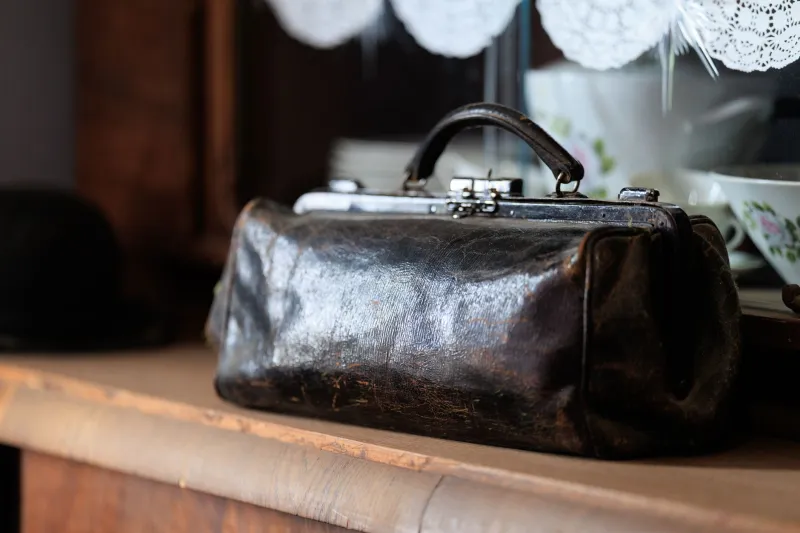
You know the one. It's broken in perfectly. Every zipper pull lands exactly where your hand expects it. The strap sits on your shoulder like it was measured for you — because at this point, it basically was. You've stopped thinking about it, and that's exactly the problem.
There's a weird thing that happens with bags we love for a long time. They become invisible. Not in a bad way at first — invisibility in a bag is actually the goal. You want it to disappear into your life, to just work without asking anything of you. But somewhere along the way, invisible can tip into overlooked. And overlooked can tip into staying put even when something better is waiting.
This is the bag upgrade paradox: the more perfectly a bag fits your life, the harder it is to notice when your life has quietly outgrown it.
Functionality Is a Moving Target
Here's the thing about bags — what counts as functional changes constantly, even when you don't notice it happening. Three years ago, maybe you needed a giant tote that could swallow a laptop, a gym change of clothes, and a week's worth of receipts. Today, you're working hybrid, traveling lighter, and your whole vibe has shifted toward something more streamlined. But you're still carrying that tote. Because it's yours.
Or maybe the opposite happened. You bought a minimalist crossbody right when you were in your "I only need the essentials" era, and now you're planning weekend trips, hauling a camera, and trying to make it work with a bag that was never designed for that life.
Functionality isn't a fixed feature — it's a relationship between the bag and the person carrying it. When one of those things changes and the other doesn't, the relationship starts to strain. But because the bag is familiar, we tend to blame ourselves first. I just need to pack smarter. I'll get a better organizer insert. I'll figure it out. Sound familiar?
The Nostalgia Tax
Attachment to a bag isn't just about utility. A lot of the time, it's about what the bag has witnessed. The airport sprint you barely made. The first-date nerves you carried in it. The work trip where everything went sideways and somehow you pulled it off. That bag was there, and now it holds some version of those experiences.
That's real. We're not dismissing it.
But there's a cost to letting that emotional weight become the primary reason you keep carrying something. Call it the nostalgia tax — the invisible surcharge you pay in daily inconvenience, suboptimal function, and missed opportunities to find something that actually fits who you are right now. You're not honoring the bag by keeping it in rotation past its prime. You're just making your daily life a little harder out of sentiment.
The bag you loved for what it carried you through deserves to be remembered, not overworked.
How to Actually Tell the Difference
So how do you know if you're holding on for good reasons or just comfort? A few honest questions worth sitting with:
Would you buy it again today? Not the version of you who bought it — the version of you right now, with your current lifestyle, your current travel habits, your current needs. If the answer is anything less than a confident yes, that's worth paying attention to.
Are you working around it? If you've developed workarounds — a secondary pouch, a tote-within-a-tote, a habit of transferring things before certain kinds of outings — the bag isn't actually working. You are. And you're doing it on behalf of a bag.
Does it fit your life or a life you used to have? This one stings a little, but it's the most useful question. Our bags are a snapshot of who we were when we chose them. Sometimes that snapshot is still accurate. A lot of the time, it isn't.
Have you stopped noticing it — or started avoiding it? There's a difference between a bag so good you don't think about it and a bag you've stopped considering because it feels like too much to address. One is mastery. The other is avoidance dressed up as loyalty.
The Permission Slip You Didn't Know You Needed
Here's something nobody really says out loud in the bag world: retiring a beloved bag is not a betrayal. It doesn't erase what it meant to you. It doesn't undo the trips, the memories, the years of good service. A bag that genuinely served you well deserves a graceful exit — not to be dragged along until it falls apart, and not to be guilt-tripped into staying in your everyday rotation after it's earned its rest.
The most stylish, well-traveled people we know have a healthy relationship with bag evolution. They keep the pieces that still perform. They honor the ones that don't by finding them a secondary role — the weekend bag, the gym bag, the car bag — or by passing them on to someone who'll love them fresh. What they don't do is let the weight of history talk them out of something better.
And "better" doesn't mean more expensive or more impressive. It means more suited to who you actually are right now. A $90 canvas tote that fits your current life is a better bag for you today than a $600 leather satchel that fit a version of you from four years ago.
Making the Move Without the Guilt
If you've read this far and a specific bag came to mind — that's your answer. The one that's been nagging at you, the one you keep defending to yourself, the one you describe with a lot of buts — that's probably the one worth reconsidering.
You don't have to get rid of it. You don't have to do anything dramatic. Start by giving something new a genuine try. Not a tentative, one-outing test where you've already decided the old one is better. A real trial — a week, a trip, a real stretch of your actual daily life.
You might find out the original is irreplaceable. It happens. Some bags really do have that quality. But you might also find out you've been paying a nostalgia tax for longer than you realized, and that the next great bag was just waiting for you to make room.
Carry what you love. Just make sure you're loving it for the right reasons.