You Own More Bags Than You Think — Here's Why You Keep Forgetting Them
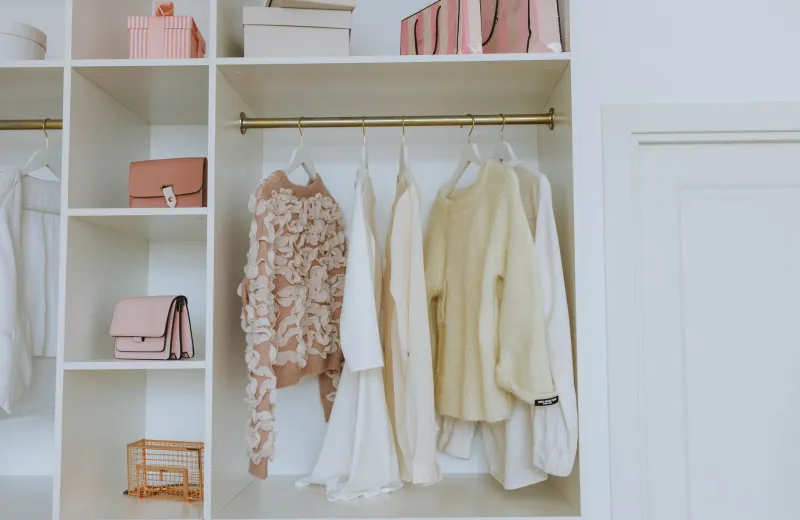
Somewhere in the back of your closet, there's a bag you forgot you owned.
Maybe it's a crossbody you bought for a trip three years ago and never rotated back into regular use. Maybe it's a structured tote that got replaced by a newer one and quietly migrated to the shelf. Maybe it's a clutch you love but only remember when you're already running late for the event you needed it for.
You're not disorganized. You're not careless. You're experiencing something that happens to almost every person who owns more than a handful of bags — a phenomenon we're calling bag blindness, and it's quietly driving some of the most wasteful spending in fashion.
What Bag Blindness Actually Is
Bag blindness isn't about literally not seeing your bags. It's about your brain filing them away as solved problems.
Here's how it works: Once you establish a carrying routine — say, you reach for the same tote every workday and the same crossbody every weekend — your brain stops actively registering the other bags as options. They exist in your space, but they don't exist in your decision-making. Psychologists call this a form of inattentional blindness, and it applies to physical objects just as much as it applies to visual stimuli.
The result is a closet full of bags you technically own but functionally don't use — and a shopping habit that keeps adding to the pile because the gap you're trying to fill already has a solution sitting on a shelf you've stopped looking at.
The Duplicate Purchase Trap
Here's where bag blindness gets expensive.
You're browsing and you see a caramel-toned leather tote. It speaks to you. It feels like exactly what's been missing from your rotation. You buy it. It arrives. You love it. And then, six months later, you're doing a closet cleanout and you find the caramel-toned leather tote you bought two years ago — the one you forgot about, the one that's actually slightly nicer, the one that's been sitting in a dust bag on the top shelf.
This scenario plays out constantly, in every price range. It's not a character flaw. It's a predictable consequence of storing bags in ways that make them invisible — stacked in bins, shoved behind other items, tucked into closet corners where out of sight genuinely means out of mind.
The fix isn't more willpower at checkout. It's better visibility at home.
The Photography Method
One of the most effective — and underused — tools for managing a bag collection is also the simplest: photograph everything you own.
Not a casual snapshot. A deliberate photo, good light, bag unzipped and open so you can see the interior, laid flat or hung against a neutral background. Do this for every bag you own, from your everyday tote to the evening clutch you use twice a year.
Then put all those photos in one album on your phone. Label them if you want, but even unlabeled, the visual inventory does something your memory can't: it makes your entire collection simultaneously visible and comparable. The next time you're tempted by a new purchase, scroll through the album first. You might be surprised how often the thing you're looking for is already there.
This also helps enormously when you're packing for a trip. Instead of digging through your closet trying to remember what you own, you've got a visual reference that takes ten seconds to check.
Display as a Functional Strategy
For bags you use regularly, display isn't just aesthetic — it's practical.
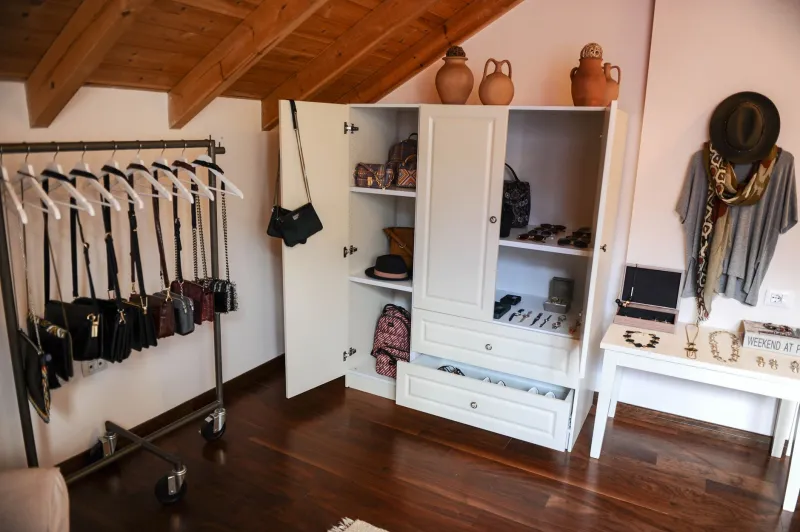
Hooks on the inside of a closet door, a row of open shelves, even a simple over-door organizer with clear pockets — any system that keeps bags visible and accessible will dramatically increase how often you actually use them. When a bag is in sight, it's in rotation. When it's buried, it might as well not exist.
This is why so many stylists and serious collectors use open shelving for their everyday bags. It's not showing off. It's a functional reminder system that makes the most of what you already own.
For bags you use seasonally or occasionally, clear storage boxes are a middle ground. They protect the bag while still letting you see what's inside without digging. Label the outside with a quick description or tape a photo to the front of the box. Future you will be grateful.
Apps and Digital Cataloging
If you want to go a step further — especially if you have a large collection or share closet space — there are apps designed specifically for wardrobe and accessory cataloging that work beautifully for bags.
Stylebook lets you photograph and tag your entire wardrobe, create outfit combinations, and track how often you actually wear things. It's popular among fashion-conscious users for exactly this reason: it makes the invisible visible.
Whering is a UK-based app with a strong US user base that does similar work with a cleaner interface and a sustainability angle — it actually calculates cost-per-wear for items you log, which is a useful reality check for both what you own and what you're considering buying.
Even a simple spreadsheet works if apps feel like overkill. A Google Sheet with columns for bag type, color, material, last used, and a photo link takes about an hour to set up and can genuinely change how intentionally you shop.
Seasonal Rotation as a Cure
One of the best antidotes to bag blindness is a deliberate seasonal rotation — something we've covered before at OOOBag, because it genuinely works.
When you rotate bags with the seasons, you're forced to revisit everything you own at least four times a year. Bags come out of storage, get assessed, get used. Nothing stays invisible for more than a few months. And the act of pulling out last spring's bags and evaluating them before shopping for new ones creates a natural checkpoint against duplicate buying.
It also makes rediscovery feel good rather than wasteful. Finding a bag you forgot you owned isn't a reminder that you overspent — it's a free shopping trip.
Before You Add to the Collection
Once you've done the inventory work — photographed, organized, maybe even cataloged — build one rule into your shopping process: check your collection before you buy.
Not in a punitive way. Not as a reason to never buy anything new. Just as a moment of genuine consideration. Does the bag you're looking at fill a real gap in what you own, or does it duplicate something you already have? Is the reason you feel like you're missing something actually that you've forgotten what you have?
Sometimes the answer is yes, you genuinely need the new bag. Great — buy it with confidence.
But sometimes the answer is that the bag you've been looking for is sitting on a shelf in your own closet, waiting to be rediscovered. And that's a better kind of find.