Logo Who? Why the Most Stylish Shoppers Are Moving On from Monograms
There was a moment — and honestly, it lasted about two decades — when the whole point of an expensive bag was that everyone could tell it was expensive. The interlocking initials. The repeating pattern. The hardware stamped with a name you'd recognize from a hundred feet away. Status was the product, and the bag was just the vehicle.
Something is shifting. And it's not subtle anymore.
The Quiet Confidence of Going Logoless
Talk to anyone who works in fashion — a stylist, a buyer, a dedicated fashion editor — and you'll hear some version of the same thing: the most interesting bags right now aren't the ones with the biggest names on them. They're the ones that make you stop and ask, who made that?
That question used to be a flex in one direction. Now it's a flex in another. There's a certain kind of style authority that comes from carrying something nobody can immediately place — something that signals taste rather than spend.
This isn't anti-luxury. It's a different definition of it.
Luxury used to mean visibility. Increasingly, it means invisibility — or at least, a more selective kind of visibility. The person who knows, knows. Everyone else just sees a really beautiful bag.
The Rise of the Independent Designer
One of the most exciting things happening in the American accessories market right now is the emergence of independent bag designers who are building real followings without the infrastructure of a heritage house behind them. Labels like Wandler, Staud, Loeffler Randall, and Métier have found devoted audiences not through logo saturation but through genuinely distinctive design.
What makes these brands work? A few things:
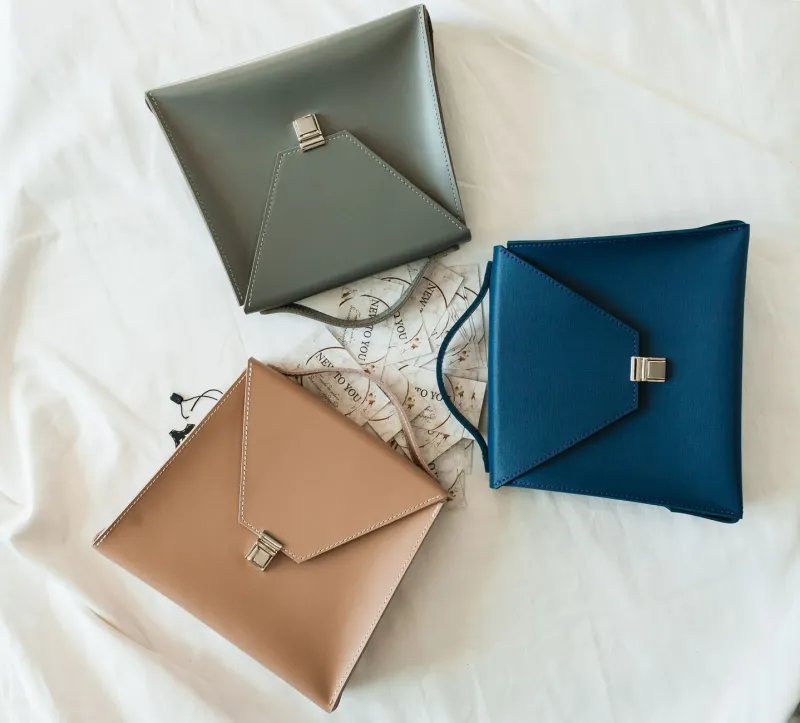
Shape language. Independent designers often take more risks with silhouette. When you can't rely on a monogram to sell the bag, the actual form has to do the work. The result is often more interesting, more memorable design.
Material honesty. Smaller brands tend to be more transparent about what their bags are made of and where. That transparency has become its own kind of luxury signal for a generation of shoppers who've read enough about fast fashion to care.
Limited production. You're less likely to walk into a party and see three other people with your exact bag when you're buying from a brand that makes smaller runs. Exclusivity through scarcity rather than through price point.
What's Driving the Shift?
A few cultural forces are converging here, and they're worth unpacking.
First, there's the resale market effect. Once luxury logos became widely available on the secondhand market — and once the replica market became sophisticated enough that even trained eyes get fooled — the logo lost some of its reliable status signal. If a bag's branding can be faked convincingly, the branding alone isn't the flex it used to be.
Second, there's what you might call the anti-uniform movement. Younger shoppers in particular have shown a consistent preference for individuality over belonging. The appeal of wearing the same monogram tote as millions of other people — even if yours is authentic — has dimmed considerably for a segment of the market that values standing out over fitting in.
Third, and maybe most significantly, there's a growing sophistication around craft. Shoppers who've spent time researching bags — reading about construction, leather sourcing, hardware quality, stitching techniques — have developed an eye for quality that has nothing to do with what's printed on the leather. They can feel the difference between a well-made bag and a not-so-well-made one. And once you can feel that difference, the logo becomes almost beside the point.
The New Status Signals
So if logos are fading as the primary marker of a quality bag, what's replacing them? Here's what the most discerning shoppers are actually looking for:
Construction details. Edge painting, saddle stitching, clean interior finishing — the stuff that takes time and skill to get right. These details don't photograph as dramatically as a logo, but they're immediately apparent when you're holding the bag.
Functional intelligence. A bag that's genuinely well-designed for how people actually use it — thoughtful pocket placement, comfortable weight distribution, hardware that operates smoothly after years of use — communicates a kind of design seriousness that's increasingly valued.
Material provenance. Italian leather from a named tannery. Hardware sourced from a specific manufacturer. These specifics, when a brand is willing to share them, function as credibility markers in a way that a logo simply can't.
Longevity. There's a reason the resale value conversation has become so prominent in how people talk about bags. A bag that holds its value — or gains it — over time is making an argument about quality that no amount of branding can fake.
Does This Mean Logos Are Dead?
Not even close. The heritage houses aren't going anywhere, and there will always be a market for visible luxury. The classic monogram tote isn't becoming uncool — it's just becoming one option among many, rather than the default definition of what a great bag looks like.
What's changing is the hierarchy. For a long time, the logo was the shortcut — buy the logo, signal the status, done. What's emerging is a more nuanced landscape where the logo is just one data point, and increasingly not the most interesting one.
The most compelling bags on the market right now make you want to know their story. Who made them? Where? Out of what? How long will they last? Those questions are the new luxury conversation — and they're a lot more interesting than a monogram.
Carry What You Actually Love
At the end of the day, the best bag is the one you reach for every morning without overthinking it. If that's a classic logo tote, great. If it's an unbranded structured leather bag from a designer you discovered down an Instagram rabbit hole at midnight, also great.
The real shift isn't about logos versus no logos. It's about intention. The most stylish shoppers — the ones whose bags you actually notice — are making deliberate choices based on what they love and what works for their lives, not what signals the right thing to the right people.
That's always been what good style is. We're just finally catching up to it.